Footrot in Sheep: Causes, Signs, and Treatment
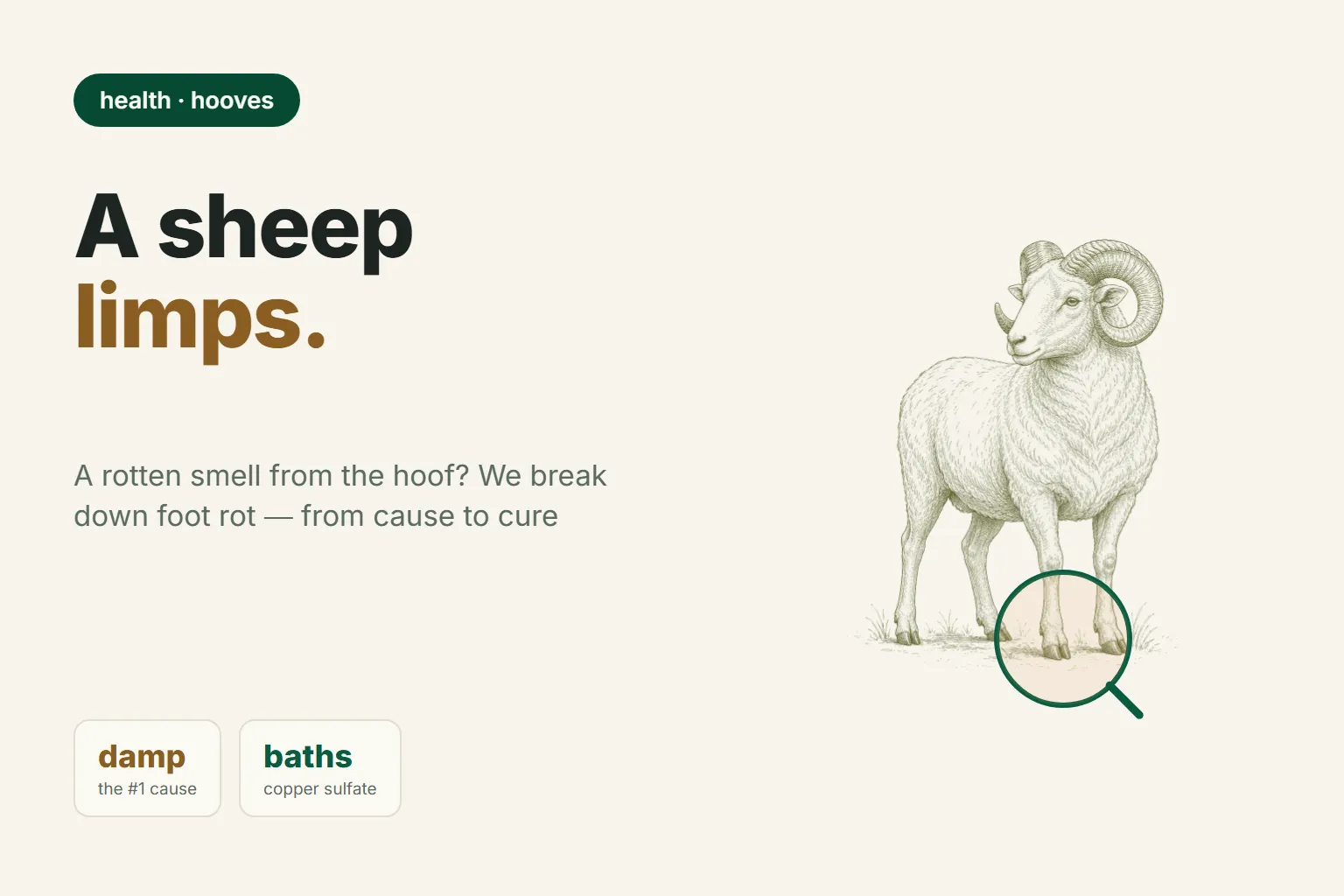
Is your sheep limping, with a foul smell from the hoof? Let's break down footrot: why it flares up in a damp pen, how to spot it, how to treat it (hoof trimming, footbaths), and how to prevent it.
Has your sheep started limping and falling behind the flock, and does the hoof give off an unpleasant, rotten smell when you bend down to check it? Chances are, it's footrot. It's a contagious disease that spreads through a flock fast, hitting exactly where it hurts — condition and weight gain — and for breeding rams, especially around Qurbon Hayit season, it hits the price too. The good news: footrot responds well to control if you catch it early and work at it systematically. Let's go through it step by step: what it is, how to spot it, how to treat it, and how to prevent it.
What Footrot Is
Footrot (infectious pododermatitis) is a contagious bacterial infection of the hoof. The main culprit is the bacterium Dichelobacter nodosus, which works together with Fusobacterium necrophorum: the latter softens and inflames the skin between the claws, while the former penetrates deeper and breaks down the bond between the horn capsule and the soft tissue underneath. That's where the main trouble comes from — pain, lameness, and separation of the horn.
The key thing to remember: the bacteria love warmth and moisture. In wet bedding, mud, or a flooded pen, they thrive — but on dry, firm ground, away from the hoof, they don't survive long, a matter of days rather than months. That's exactly why the disease flares up in wet periods and dies down in dry ones. It takes about two weeks from infection to the first visible signs.
This matters for Uzbekistan specifically. In summer it's dry and hot here, so the risk is minimal. But in winter and early spring, moisture builds up in the pen — melting snow, trampled wet bedding, slush in the yard. That's the window when footrot starts to rear its head.
How to Spot It: Key Signs
The earlier you notice it, the easier and cheaper it is to treat. Watch for:
- Lameness. Usually the first sign. The sheep favors the affected leg, falls behind the flock, and in severe cases may graze on its "knees" or spend more time lying down.
- Smell. A distinctive rotten, foul odor from the hoof — almost a calling card of the disease.
- Horn separation (underrunning). The horn capsule pulls away from the soft tissue, with a moist, grayish, decaying mass underneath. This is already the severe, "virulent" form.
- Redness and moist skin between the claws. This is the early, mild form (called scald). At this stage there's no deep damage yet — and it's the best moment to step in.
- General condition. When several legs are affected, the animal spends a lot of time lying down, loses body condition, eats less; nursing ewes produce less milk.
If many sheep go lame at once, run a fever and have sores on the coronary band or in the mouth, with no smell from under the hoof, it may not be footrot but a notifiable disease. How to tell them apart and what to do in the first 24 hours is covered in our article on foot-and-mouth disease in sheep: signs, vaccination and quarantine.
Why It Happens: Causes and Risk Factors
- Moisture and mud. Wet bedding, puddles in the yard, a flooded pen — the main condition for an outbreak.
- Untrimmed, overgrown hooves. Mud and manure build up in the folds and pockets of overgrown horn, creating a damp, airless spot — the perfect home for bacteria.
- Bringing in infection. The classic case — buying new animals, or shared grazing or watering with someone else's flock. One limping "newcomer" can infect the whole flock.
- Crowding. The more tightly animals are packed together, the faster the bacteria spread from foot to foot.
Sign → Action: Quick Reference Table
| What you see | What to do |
|---|---|
| The sheep is limping, but the hoof looks clean | Check the leg, lift and clean the hoof, check for smell and redness |
| Redness, moist skin between the claws (scald) | Early form — treat right away, isolate, move to a dry area; don't delay |
| Foul smell, horn separation | Hoof trimming + footbath + local treatment; isolate from the flock |
| Several animals limping at once | Work with the whole flock: check each animal, footbaths, clean up the pen, call a veterinarian |
| Lameness doesn't clear up after treatment, hoof is deformed | A chronic case — a source of infection; discuss culling with a veterinarian |
Treatment: Trimming, Footbaths, and Local Treatment
Treatment rests on four pillars, and all of them matter equally.
1. Isolation. Separate sick and limping animals from healthy ones right away and move them to a dry area. As long as they stay in the general flock, they keep spreading the infection.
2. Hoof trimming. Carefully remove the separated, underrun horn to expose the affected tissue — otherwise the footbath solution and antiseptic won't reach the bacteria. Trim gently; there's no need to draw blood. Disinfect your tools between animals.
3. Footbaths. The working "classic" is a solution based on zinc sulfate or copper sulfate. Zinc sulfate is gentler — it doesn't burn the skin or stain the wool. Copper sulfate is also effective, but it's toxic if the animal drinks it, stains wool, and corrodes metal. A common working concentration is around 10%, but prepare the exact strength strictly according to the product label and your veterinarian's guidance — never by eye. Animals stand in the solution for a few minutes (typically about 10–15), and afterward they're moved to a dry area so the hoof can dry out. Never let animals drink from the footbath or the solution itself.
If the flock is large and there is nobody to trim hooves, it is simpler to hire the job out: hoof trimming services are usually priced per head, and across a hundred animals that costs less than a week of doing it yourself.
4. Local treatment. After trimming, individual severe hooves are treated with an antiseptic spray or a product prescribed by the veterinarian. In advanced or widespread cases, the vet may prescribe systemic antibiotics — the choice, dose, and duration should be determined by a specialist only.
This is an informational article, not a substitute for an examination. Agree on the treatment plan, products, and concentrations with a veterinarian — especially if a large part of the flock is affected.
It helps to log the plan against each animal right away: an animal health card with footbath and trimming dates shows who is lame for the second time — those are usually culled.
Prevention: Dryness, Trimming, Quarantine
It's cheaper to keep footrot out than to treat it.
- Keep feet dry. Dry bedding, drainage away from the pen and watering area, fixing the "swamp" spots in the yard. Dryness is your best ally against this disease.
- Trim hooves regularly. Scheduled trimming removes the pockets where mud and bacteria hide. Build it into your routine, especially before the wet season.
- Quarantine newcomers. Keep any purchased animal separate for at least two weeks: check and trim its hooves on arrival, treat it, and check again before adding it to the flock. Don't mix your flock with others at shared grazing or watering spots.
- Preventive footbaths. In wet periods, running the flock through a footbath helps hold the spread in check.
- Don't delay on chronic cases. An animal that keeps limping and won't heal is a constant source of infection; discuss culling with your veterinarian.
In Short
Footrot is a disease of moisture and neglected hooves. Catch it early (limping, smell, redness between the claws) — isolate the animal, trim the hoof, run it through a footbath, and treat it, following the product label and your veterinarian's guidance. Prevention is easier: dry floors and yards, scheduled hoof trimming, and quarantine for every newcomer. That way the flock stays on its feet — literally.
Make it a habit to check hooves on a schedule and log who was treated and when: that way problem animals and chronic cases show up right away, not after half the flock is already limping.
Manage your flock in QoyHunterCRM for sheep farmers: livestock, health, weighing, finance and analytics — in the app and a Telegram bot.All features →