
Sheep Pox: Day-by-Day Signs, Vaccination, and What an Outbreak Costs an Unvaccinated Flock
Sheep pox has no cure: the virus runs its course in 3–6 weeks on its own, while lambs in an unvaccinated flock die in large numbers. Day-by-day signs, how it differs from orf, when to vaccinate, and the loss calculation for a flock of 100 ewes — about 37 million UZS (≈ $3,100).
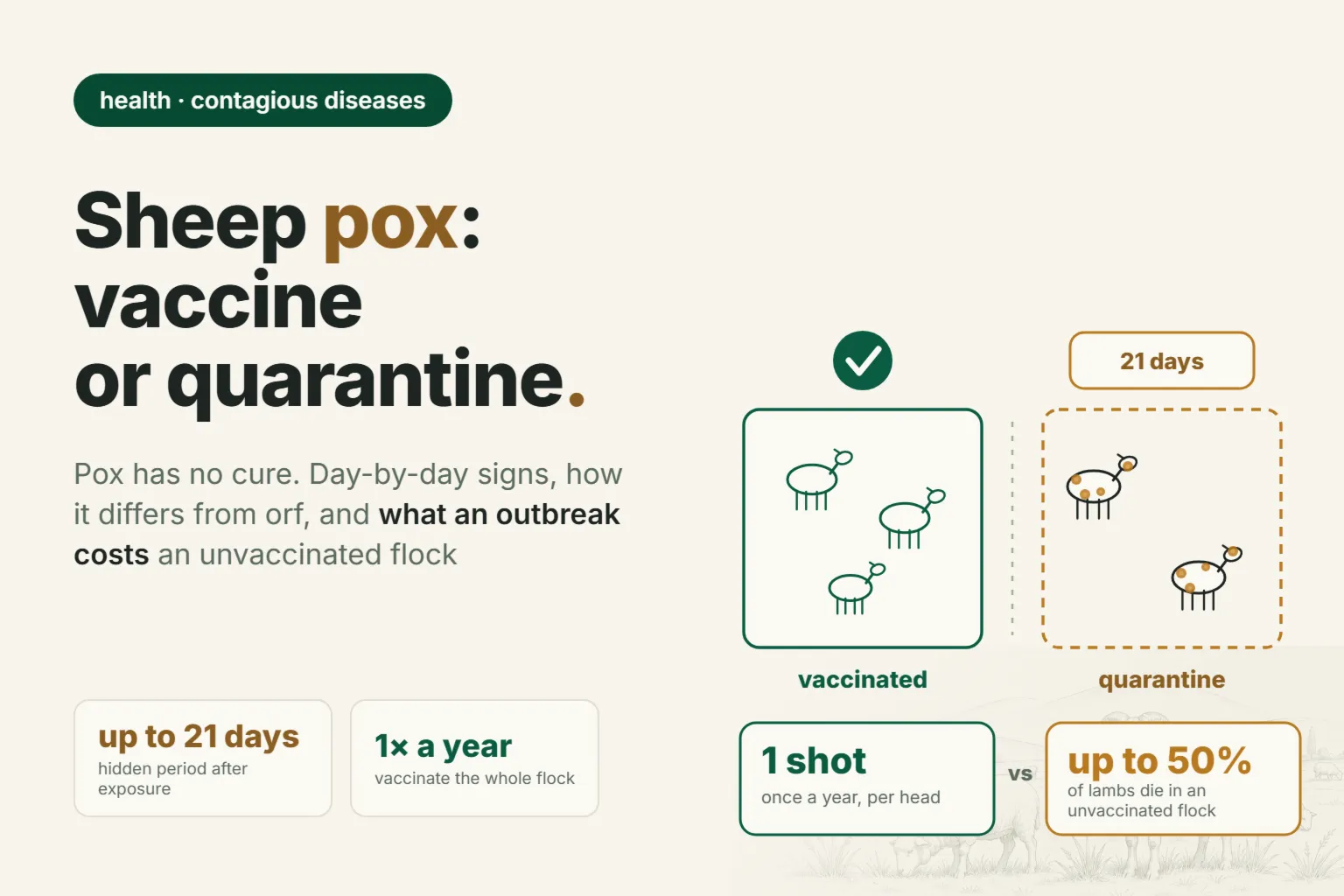
Sheep pox is a viral disease with no cure: the only protection is a live vaccine given once a year. In an unvaccinated flock, pox sweeps through most of the sheep, lamb mortality reaches 50% and higher, and the farm is placed under quarantine and barred from selling livestock for the duration. Below: day-by-day signs of sheep pox, how to tell it apart from contagious ecthyma, what to do on the first day, and the loss calculation for a flock of 100 ewes.
Figures are at September 2026 prices, using an exchange rate of 11,825 UZS to the dollar (the Central Bank of Uzbekistan's official rate on September 26, 2026).
What Is Sheep Pox and How Does It Get Into a Flock?
Sheep pox is a contagious viral disease of sheep (caused by a capripoxvirus) that produces nodules on the skin and mucous membranes, which then turn into scabs. The World Organisation for Animal Health (WOAH) lists sheep and goat pox among the diseases countries are required to report. Humans don't get sheep pox.
The virus spreads through direct contact between a sick and a healthy sheep, through the air in a crowded sheep shed, through scabs that fall off infected animals, and through wool, bedding, feeders, and a shepherd's clothing. In dry scabs and a dark shed the virus survives for months — veterinary references put it at up to six months indoors, which is why pox can "come back" into a shed where the flock was sick the previous winter.
Most often, pox is brought into a healthy flock by a purchased ewe or ram. The incubation period — from infection to the first signs — is usually 8–13 days per WOAH, and for quarantine and trade purposes WOAH sets it at 21 days. That's how long a new sheep is kept separate from the flock.
What Are the Signs of Sheep Pox?
Sheep pox progresses in stages. What a shepherd notices first is fever and nodules on wool-free areas: around the eyes, on the lips and nostrils, on the ears, under the tail, on the udder and scrotum, and on the inner thighs.
| Timing | What you see |
|---|---|
| Day 1–2 | Temperature 40–41°C, the sheep stands listless, eats poorly, discharge from the eyes and nose |
| Day 2–5 | Red spots on bare skin turn into firm, pea-sized or larger nodules within a day |
| Day 5–10 | Nodules filled with cloudy fluid or dry, and in some sheep nodules develop in the lungs: coughing, labored breathing |
| Day 10–20 | Nodules dry into dark scabs |
| Week 3–6 | Scabs fall off, leaving scars; the sheep slowly regains weight |
The illness itself lasts 2–3 weeks; skin healing and weight recovery take longer. Pregnant ewes can abort during a pox outbreak. In lambs and weakened sheep, nodules often reach the lungs and intestines — that's the main source of death.
How Do You Tell Sheep Pox from Contagious Ecthyma?
Contagious ecthyma (known informally as "sore mouth," or scientifically as orf) is a different viral disease where scabs grow mainly on the lips and around the mouth, more often in lambs. It's easy to confuse with pox, and the mistake is costly: a flock gets through ecthyma with almost no deaths, while pox requires quarantine and reporting to a veterinarian.
| Sign | Sheep Pox | Ecthyma |
|---|---|---|
| Temperature | high, 40–41°C, before nodules appear | usually normal or slightly elevated |
| Where lesions appear | all over the body on wool-free areas, sometimes in the lungs | lips, mouth, nostrils, and the udder in ewes |
| Appearance | separate firm nodules, then flat scabs | thick, bumpy scabs that crack and bleed |
| Overall condition | severe, the sheep won't eat, coughs | the lamb is alert but can't nurse from mouth pain |
| Mortality | up to 50% and higher in lambs in an unvaccinated flock | low, unless there's a secondary infection |
Only a veterinarian can give an exact diagnosis, based on testing scabs or blood. If several sheep have fever and nodules on bare skin at the same time, call a veterinarian that same day.
How Much Does a Flock Lose in a Pox Outbreak?
Let's calculate for a flock of 100 ewes and 90 spring-born lambs that weigh about 30 kg by autumn. No vaccination was done, and pox was brought in with a purchased ram. According to Iowa State University's Center for Food Security and Public Health (CFSPH), morbidity in sheep pox ranges from a few cases to 100%, adult mortality is usually below 10%, and mortality in young animals reaches 50–100%. We'll use a cautious scenario:
- 70% of the flock gets sick;
- one in five sick lambs dies — 13 head; at the price from our annual cost of keeping a sheep breakdown, a lamb is worth 1.54M UZS;
- 4 ewes die — 5–6% of the sick ones; an ewe's value at meat price is 2.7M UZS;
- 40 lambs that were meant for autumn sale stay on the farm for 60 days of illness and quarantine (2–3 weeks of illness plus at least a month of quarantine), eating feed worth about 2,500 UZS a day.
| Loss item | Calculation | Amount |
|---|---|---|
| Dead lambs | 13 × 1.54M UZS | 20.0M UZS (≈ $1,690) |
| Dead ewes | 4 × 2.7M UZS | 10.8M UZS (≈ $910) |
| Feed for the 60-day sale delay | 40 × 60 × 2,500 UZS | 6.0M UZS (≈ $510) |
| Total | 36.8M UZS (≈ $3,110) |
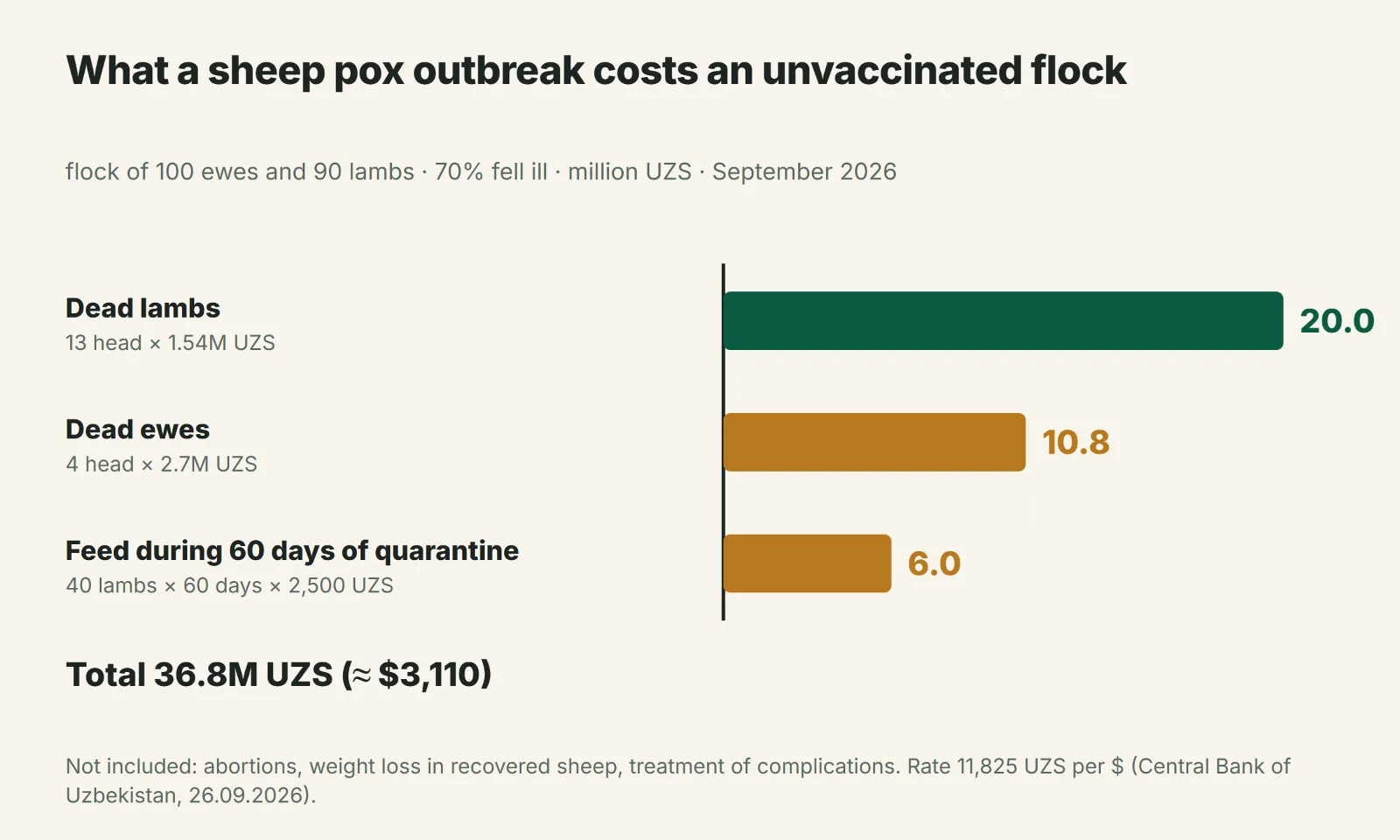
Not included: abortions in pregnant ewes, weight loss in recovered sheep, hides ruined by scarring, and treating complications. With those, the losses run higher. Check the price of the annual vaccination with a veterinarian: even with a farm visit, it's nowhere near the 36.8M UZS in losses.
Can Sheep Pox Be Cured?
No, there's no cure for the sheep pox virus. A sheep either recovers on its own in 3–6 weeks or dies from complications. A veterinarian may prescribe antibiotics — they don't touch the virus, but they protect against the purulent inflammation of nodules and the pneumonia that actually kill lambs. A sheep that recovers gets lifelong immunity.
What's done for sick sheep:
- kept in a dry, draft-free place, separate from healthy animals;
- given soft feed and plenty of clean water — scabs in the mouth make chewing hard;
- eyes and nose are rinsed if they get infected, as the veterinarian directs;
- not sheared or moved until the scabs fall off.
When Should You Vaccinate Sheep Against Pox?
Sheep are vaccinated against pox with a live attenuated vaccine, some of it supplied to Uzbekistan by Russian manufacturers. Per these vaccines' instructions, the schedule is:
- The whole flock, once every 12 months — every clinically healthy sheep. Sick, weakened, and emaciated animals aren't vaccinated.
- Lambs, from 3 months. Per some vaccines' instructions, lambs under 6 months are vaccinated twice, 2 weeks apart.
- Purchased sheep — if the seller has no vaccination record, a veterinarian vaccinates them during quarantine, before they join the flock.
- Pregnant ewes can be vaccinated, but late in pregnancy they should be caught and held carefully to avoid injury. Exact limits are in the specific vaccine's instructions.
Immunity builds up 10–14 days after vaccination and lasts at least 12 months. A firm swelling 1–5 cm can appear at the injection site; it goes away in 3–15 days — that's a normal reaction. Vaccination is given by a veterinarian: which districts vaccinate flocks against pox and when is decided by the veterinary service, so start by asking at your district veterinary station.
It's worth recording the vaccination date for every sheep — even just in a notebook. If the flock is more than a few dozen head, it's easier to use the sheep vaccination and treatment log in QoyHunter, a sheep record-keeping CRM and the bazar.qoyhunter.com marketplace: there you set the planned date for the next treatment, and the app reminds you ahead of time. When a buyer asks whether the sheep is vaccinated against pox, the answer will be on hand.
What to Do If Pox Shows Up in the Flock
Sheep pox is a disease that must be reported to the state veterinary service right away. What to do on the first day:
- Call the district veterinarian the same day you notice fever and nodules in several sheep.
- Separate the sick animals into a separate pen or corner of the shed and keep them away from the shared water and pasture.
- Don't sell, buy, or move any animals. Selling a sheep from a sick flock spreads pox to other farms, and the buyer will come back with a complaint.
- Don't slaughter sick animals for meat at home — the carcass and hide of a sick sheep are disposed of on the veterinarian's instructions.
- The shepherd should change clothes when leaving the pen with sick animals and stay away from neighboring flocks.
After that, the veterinary service takes samples and, if pox is confirmed, declares quarantine. Quarantine is lifted by the veterinary service's decision — after the scabs fall off the last sick sheep, a set period passes, and final disinfection is done. Under neighboring countries' veterinary rules, that period is at least 3–4 weeks after the last case, and restrictions on fairs and livestock imports last for months longer. The whole time, the farm can't sell livestock, so an outbreak in autumn hits lamb sales, and one in spring hits preparation for Qurban Hayit.
How Do You Avoid Bringing Pox In When Buying Sheep?
The cheapest option is not to bring pox into the flock at all. When buying ewes and rams through the sheep and rams for sale in Uzbekistan listings, ask the seller:
- when the flock was last vaccinated against pox, and whether there's a record or veterinary certificate;
- whether sheep on the farm or among neighbors have been sick in the past year;
- whether the sheep have scabs on the lips, eyelids, udder, or under the tail — check yourself when buying.
After that: 21 days of quarantine apart from the flock, and vaccination if there's no record. Uzbekistan's veterinary requirements ban importing sheep not vaccinated against pox from countries and zones that aren't free of the disease. We covered how to set up quarantine in quarantining new sheep: the 30 days that save a flock.
FAQ
Can You Eat the Meat of a Sheep That Had Pox?
You can't use meat from a sick sheep without a veterinarian's clearance: the veterinary service inspects the carcass and hide from an affected flock and either disposes of them or clears them for use. Humans don't catch sheep pox, but the virus spreads from a sick flock to other farms through meat, hides, and wool.
How Many Times a Year Should You Vaccinate Sheep Against Pox?
Per sheep pox vaccine instructions, the flock is vaccinated once every 12 months, and lambs from 3 months of age (some vaccines call for lambs under 6 months to be vaccinated twice, 2 weeks apart). Purchased sheep without a vaccination record are vaccinated during quarantine, before joining the flock. Vaccination is given by a veterinarian.
What's the Difference Between Sheep Pox and Sore Mouth in Lambs?
Sore mouth in lambs is most often contagious ecthyma: the scabs are thick and bumpy, grow around the mouth, the lamb stays alert, and its temperature is close to normal. With pox, a sheep first runs a high fever of 40–41°C, and nodules appear all over the body on wool-free areas — the eyelids, ears, udder, and under the tail. Only a veterinarian's test tells them apart for sure.
Can a Vaccinated Sheep Still Get Pox?
The vaccine protects against pox starting 10–14 days after the shot, and protection lasts at least 12 months. So a sheep vaccinated more than a year ago, or less than two weeks ago, is considered unprotected. If a sheep was infected before immunity had built up, it can still get sick, which is why new sheep are vaccinated in quarantine rather than in the general flock.
How Long Does Quarantine Last for Sheep Pox?
Quarantine for sheep pox is declared and lifted by the state veterinary service. It isn't lifted until the scabs fall off the last sick sheep, a set observation period passes, and final disinfection of the shed is done. Together with the illness itself, that's about two months, and the whole time the farm can't sell or move livestock out.
Manage your flock in QoyHunterCRM for sheep farmers: livestock, health, weighing, finance and analytics — in the app and a Telegram bot.All features →