Sheep Diseases: Symptoms, Prevention, and When to Call the Vet
How to spot a sick sheep, which diseases are most common, and when to call the vet urgently. Prevention, a treatment calendar, and red flags — a practical guide for farmers.
A healthy flock comes down to prevention, not treatment. Sheep are experts at "hiding" illness until the last moment — by the time the signs are obvious, it's often already too late. That's why it matters for a farmer to know what a healthy animal looks like, which diseases show up most often, and when there's no time to wait before calling the vet. This guide is a map, not a self-treatment manual: the specific medicines, doses, and schedules should always be prescribed by a veterinarian.
How to Tell a Healthy Sheep from a Sick One
Every day, as you walk through the flock, watch for a few simple signs.
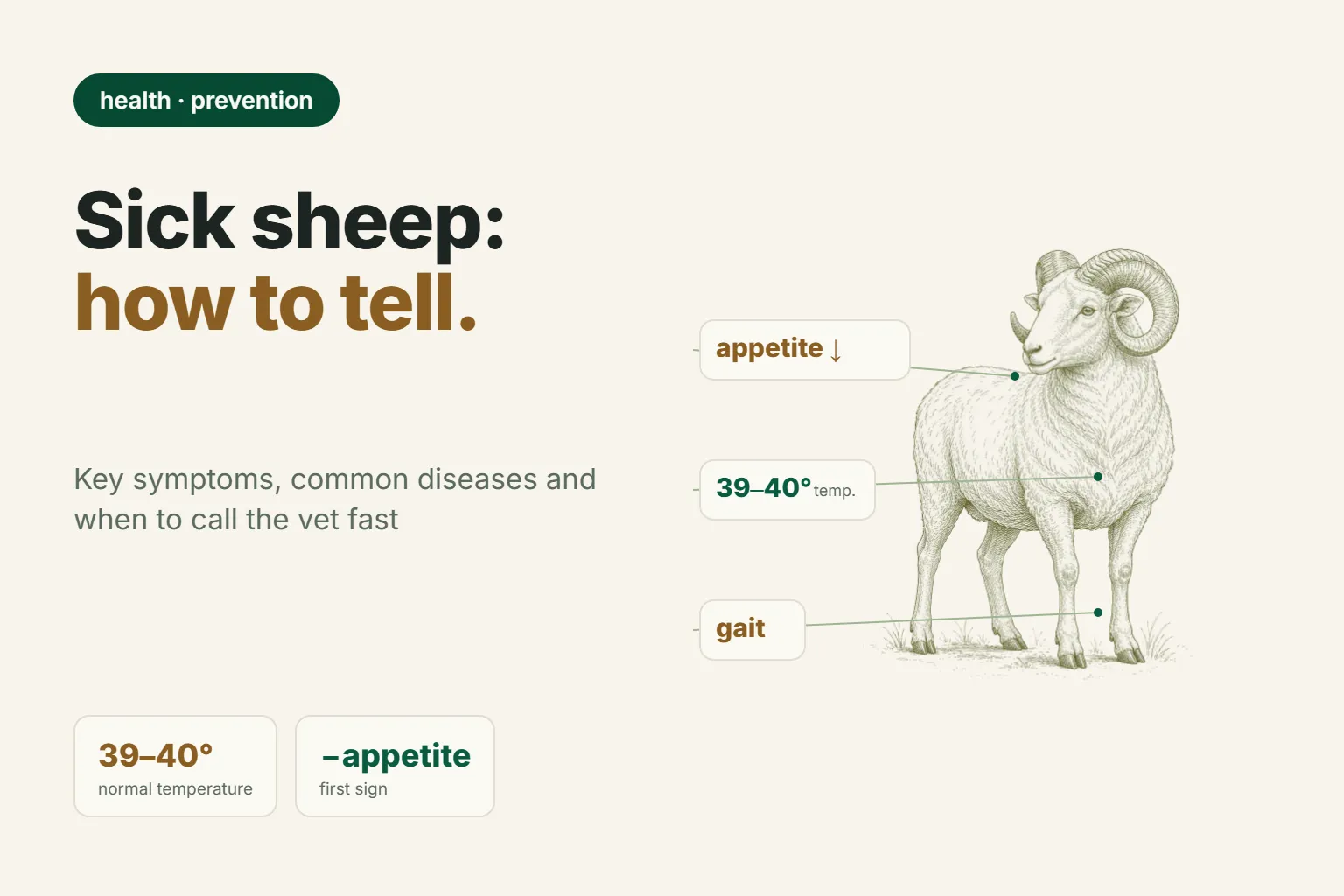
A healthy animal: grazes actively and chews its cud with a good appetite; eyes are clear and bright, with no discharge; walks evenly with no limping; droppings are firm, formed into "pellets"; coat is smooth; stays close with the flock.
Warning signs: lethargy, refusing feed, not chewing cud; cloudy, watery, or half-closed eyes; limping or reluctance to move; diarrhea, or conversely no droppings at all; a ruffled, dull coat; the animal straying from the flock and standing apart; rapid or labored breathing; teeth grinding (a sign of pain).
Normal ranges: a sheep's body temperature is roughly 38.3–39.9 °C (it can run toward the upper end in heat, with a thick fleece, or under stress), resting pulse is about 70–80 beats per minute, and breathing at rest is 16–34 breaths per minute (faster in heat). Make it a habit to take the temperature of a sick animal — it's the first thing the vet will ask about.
The Most Common and Dangerous Diseases
Clostridial Diseases: Enterotoxemia and Braxy
This is the sneakiest group of diseases: the animal is often simply found dead, with no warning signs at all. Enterotoxemia (also known as "pulpy kidney disease") is triggered by a sudden switch to rich feed — grain, lush grass, or heavy milk intake. Braxy hits more often in winter, from eating frozen feed. Vaccines exist against clostridial diseases, and they're the main line of defense, because once symptoms appear, treatment is nearly impossible.
Foot Rot
A highly contagious disease: limping, inflammation between the claws, a foul smell, and the horn peeling away. In wet, muddy conditions it can spread through almost the whole flock. Prevention means dry bedding, regular hoof checks and trimming, and foot baths; sick animals are isolated.
Sheep Pox
A dangerous viral disease for our region: fever, discharge from the eyes and nose, characteristic pox lesions on the skin and mucous membranes, and abortions in pregnant ewes. Infection rates can be high; vaccination is carried out in affected zones by decision of the veterinary authorities.
Brucellosis — Dangerous for People Too
In animals, brucellosis causes abortion and stillbirth. But the key point is that it's a zoonosis: people become infected through raw milk and through contact with amniotic fluid and the placenta during an abortion or lambing. That's why assisting a birth and cleaning up the afterbirth should always be done in gloves, and milk should only be drunk boiled or pasteurized. In Uzbekistan, brucellosis is under the control of the veterinary service: diagnostic and vaccination programs are in place, and bringing in unvaccinated animals is restricted.
Parasites: Worms, Mange, and Nasal Bot Flies
Worms (helminths) cause anemia — paleness of the mucous membranes, especially the lower eyelid, swelling under the jaw ("bottle jaw"), and weight loss despite a seemingly good appetite. Mange (a skin mite) causes intense itching; the animal scratches itself raw, and wool falls out in clumps. Nasal bot flies cause nasal discharge, sneezing, and the animal shaking its head and rubbing its nose on the ground.
Pneumonia in Lambs
It's triggered by stress: overcrowding, transport, drafts, and lack of colostrum. It shows up as high fever, labored breathing, coughing, and refusal to eat — and it develops quickly in lambs.
Pregnancy Toxemia in Ewes
This is a metabolic disease of the final weeks of pregnancy, especially in ewes carrying twins or those that are too thin or too fat. The ewe becomes listless, refuses feed, isolates herself, and then blindness and seizures appear. The cause is an energy shortfall in the diet as the growing lamb (or lambs) demand more.
Prevention Matters More Than Treatment
Most problems are cheaper to prevent than to treat:
- Quarantine new animals. Keep any new sheep separate from the flock for at least 2–4 weeks (ideally up to a month), watching its condition. This is the main barrier against bringing in infection.
- Buy only healthy animals with documentation. A veterinary health certificate and vaccination records are essential; an animal bought at the market with no papers is the main channel through which disease gets introduced.
- Keep things dry and clean. Dry bedding, a well-ventilated (but draft-free) pen, clean water, and quality feed cut out half the risks — from foot rot to pneumonia.
- Isolate sick animals and disinfect buildings during an outbreak.
- Scheduled vaccination and deworming according to the calendar below.
Treatment Calendar
The exact medicines, doses, and timing are determined by a veterinarian and the national veterinary calendar — below are just the principles behind building a yearly plan.
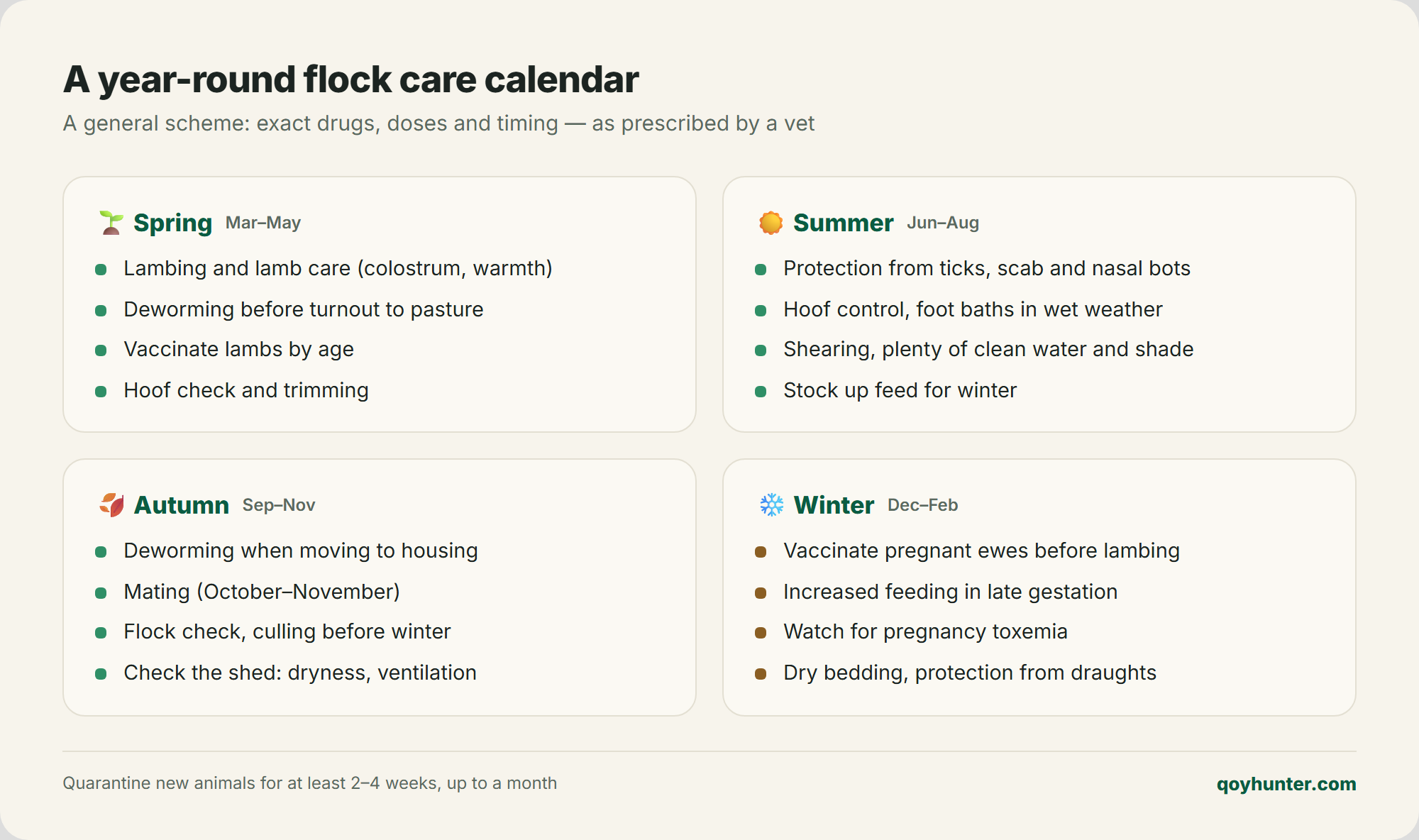
- Vaccination against clostridial diseases. The key move is vaccinating pregnant ewes a few weeks before lambing: immunity passes to the lambs through the colostrum and protects them in the first weeks of life. Lambs are then vaccinated by age with a booster — timing follows the instructions for the specific vaccine.
- Deworming is usually done 2–3 times a year, timed to turnout on pasture in spring and to housing in autumn; with crowded conditions or an active infestation, it's done more often, as directed by a vet.
- A note on rotating dewormers. The common advice to "switch drugs every time" isn't backed by current science: frequent switching actually speeds up parasite resistance. It's better to check how effective a drug is (via a fecal test) and change the active ingredient rarely, in long cycles.
- Withdrawal period. After a parasite treatment there's a period during which the meat can't be used for food — it differs for each drug, so check the label.
- Other vaccinations (pox, anthrax, brucellosis) — according to the national calendar and the instructions of your district's veterinary authority.
When to Call the Vet Immediately
Some conditions are measured in hours, not days. Don't wait, and don't try to treat these yourself:
- Sudden death of an animal that looked healthy (especially a well-fed one, after a feed change) — clostridial disease is likely, and the whole flock is at risk.
- A birth that isn't going right: no progress for more than a couple of hours, the lamb positioned wrong, or the placenta not passing for many hours.
- Uterine prolapse after lambing — a life-threatening emergency.
- Severe bloating of the abdomen along with labored breathing.
- Neurological signs: walking in circles, paralysis on one side of the face, loss of coordination (suspect listeriosis — it can kill within a day or two).
- High fever, labored breathing, and coughing in lambs — suspect pneumonia.
- A pregnant ewe that has refused feed, isolated herself, and is growing weak — suspect toxemia.
In Short
- Check appetite, cud-chewing, eyes, gait, droppings, and coat every day — catching problems early saves animals.
- Prevention (quarantine, cleanliness, dryness, vaccination) is cheaper and more reliable than treatment.
- Abrupt feed changes and dampness are common disease triggers — keep them under control.
- Brucellosis is dangerous for people too — wear gloves at lambing and drink only boiled milk.
- Doses and treatment plans are always the vet's call; this article helps you spot a problem in time — it doesn't replace a professional.
The last point is worth preparing in advance: you need to find a veterinarian and note the number before an animal goes down — there is no time to search at night.
Keeping track of flock health is easier with records: a vaccination and check-up log lets you log veterinary treatments, vaccinations, and check-ups for free, right from your phone, for every animal — so you always know who's due for a repeat treatment and when, and nothing gets lost. And you can buy or sell animals with veterinary documents on the sheep with veterinary papers for sale.
This article is for informational purposes only and does not replace an in-person consultation with a veterinarian. Diagnosis, medications, and dosages should be determined only by a qualified veterinary professional.
Manage your flock in QoyHunterCRM for sheep farmers: livestock, health, weighing, finance and analytics — in the app and a Telegram bot.All features →