Ram for Qurbon Hayit: how to choose a healthy animal and what it costs
Qurbon Hayit is the peak season for ram demand. A calm, practical guide: what age and health a qurbonlik animal should have, how to inspect it at the bazaar by teeth, eyes, and hooves, what it costs in 2026, and how sellers can profitably prepare a ram for the holiday.
Qurbon Hayit is the most anticipated holiday of the year, and for many families buying a ram becomes a project of its own: you want to honor the tradition, avoid overpaying, and get a healthy, sound animal. We've put together a calm, practical guide — from the general requirements for a sacrificial animal to inspecting it at the bazaar and the prices of summer 2026. The tone is respectful: exact religious nuances are always best clarified with your local mahalla imam, and we'll help with the practical side of choosing.
What a qurbonlik animal should be like: general requirements
Two things matter here — the animal's age and health.
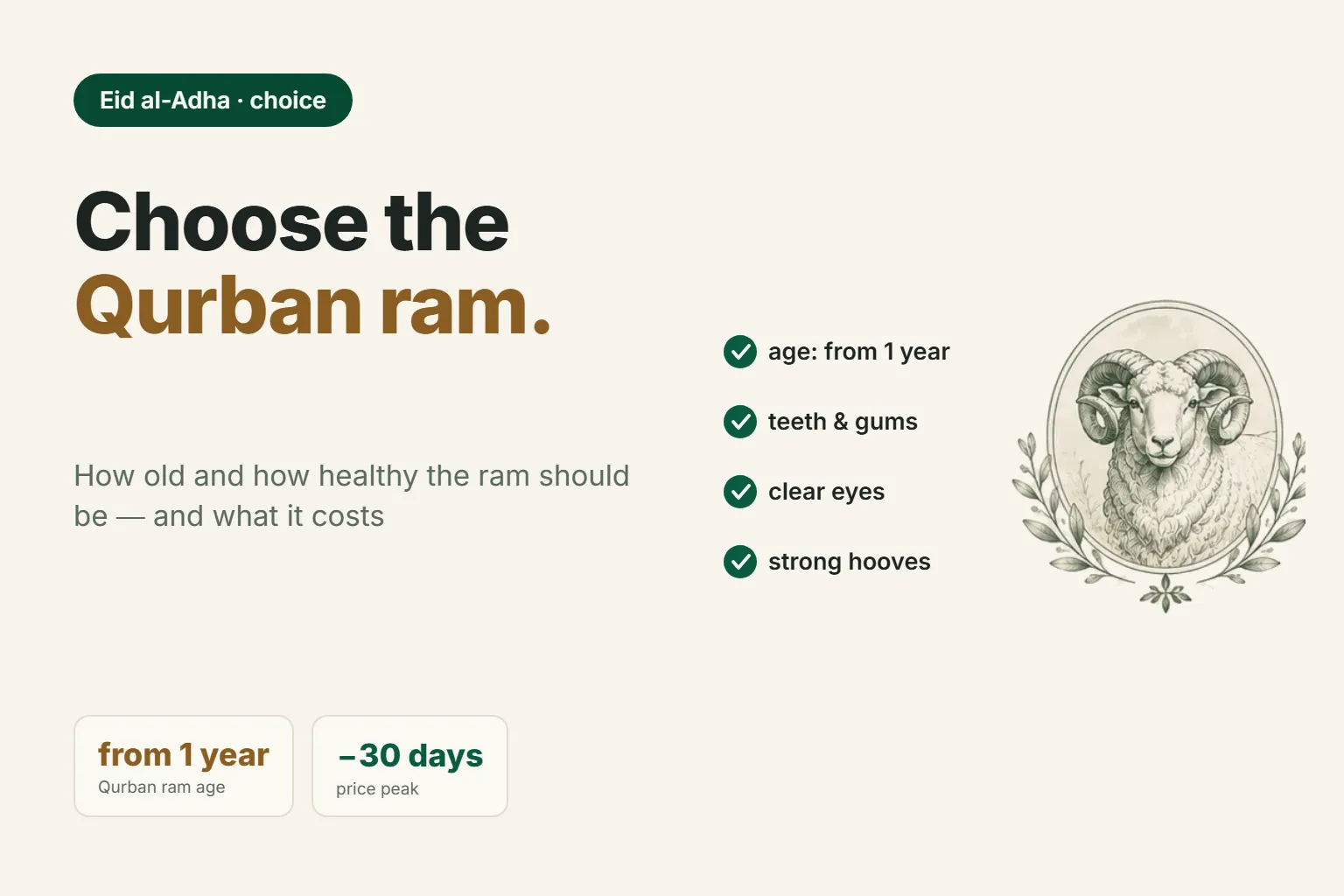
Age. As a rule, a qurbonlik ram should be no younger than one year. Local tradition calls for a mature, fully grown animal; there are separate rulings on strong, well-developed young stock, so it's best to check the details with your imam.
Health and soundness. The animal should be healthy and free of obvious serious defects. By established tradition, an animal with clear blindness, an obvious severe illness, noticeable lameness, or extreme emaciation is not taken for sacrifice. This refers specifically to obvious, glaring flaws — minor features aren't judged so strictly. Always confirm exact requirements and borderline cases with your imam or with the guidance of the Muslim Board of Uzbekistan.
Under common practice, one sheep or ram counts as the sacrifice for one family (large livestock is split into several shares). This too is worth confirming with your imam.
What follows is the purely practical part: how to make sure the animal in front of you really is that healthy, age-appropriate animal.
How to tell a ram's age by its teeth
The seller will quote any age you like — you'll verify it yourself, by the front teeth of the lower jaw (the incisors). This is the animal's most reliable "passport."
- Milk teeth — small, even, white. This means the animal is still under a year old.
- The first pair of permanent teeth — larger and wider than the milk teeth — erupts at roughly 12–18 months. Once two broad "shovels" appear in the center, the animal is about a year old or older.
- The second pair is added at roughly 18–26 months (around two years), then one more pair each year, and by 4 years the mouth is "full."
For a qurbonlik animal, seeing the first pair of permanent incisors is enough — it confirms the ram is at least a year old. The timing shifts a bit by breed and feeding, but the general order is stable.
Inspecting at the bazaar: health checkpoints
Inspect the animal calmly and in order. A healthy ram is active, reacts to you, and chews its cud.
| What to check | Normal | Warning sign |
|---|---|---|
| Eyes | clear, bright, no discharge | cloudiness, pus, watering, pale eyelids |
| Nose and breathing | dry nose, even breathing | runny nose, coughing, wheezing, fast breathing at rest |
| Coat and skin | even, clean, glossy | bald patches, scratch marks, crusts, matted clumps (signs of mange/parasites) |
| Legs and hooves | walks evenly, hooves are firm | lameness, smell of rot, severely overgrown hooves |
| Hindquarters | dry, clean under the tail | dirt, signs of diarrhea (GI issues/worms) |
| Body condition | back and ribs palpable with flesh over them, tail fat (dumba) full | protruding bones, or conversely only fat with no muscle |
Feel the animal by hand along the back and withers: leanness and loose fat can both hide under the wool. A good ram is dense, "packed" with meat, with a full tail fat. If you see clear signs of illness — lethargy, refusal to eat, labored breathing — it's better to walk away, and when in doubt, ask a veterinarian.
Weight and breed: what you're paying for
A ram's price comes down to weight, condition, and breed. For Qurbon in Uzbekistan, fat-tailed breeds are the most common choice — they carry plenty of meat and valuable tail fat.
| Breed | Rams' live weight | Tail fat (dumba) | What makes it good |
|---|---|---|---|
| Hisor | 130–140 kg (best up to 190) | 18–30 kg | maximum meat and fat per head |
| Edilboy | 110–120 kg (up to 160) | 12–14 kg | balance of meat and hardiness |
| Jaydara | 100–110 kg | 10–12 kg | low-maintenance, popular lowland breed |
For the holiday, many people choose a large, "showy" animal with a high, full tail fat. But remember: at the bazaar you pay for live weight, while what you bring home is the carcass. The dressing percentage for well-fed young stock of fat-tailed breeds is about 50–53%, meaning a ram with a live weight of 60 kg yields roughly 30–32 kg of meat, fat, and bone. Don't chase an empty "frame" — a large skeleton with no meat is heavy but not very useful.
If it is a big fat tail you want, look at the breed separately: Hissar rams for sale are usually heavier and pricier per head, but their meat yield is higher too.
How much does a ram cost for Qurbon, and how not to overpay
Ram prices are tightly tied to the calendar. A few weeks before Qurbon Hayit, demand spikes and prices climb by tens of percent — this happens every year.
Benchmarks for 2026 (rate ≈ 12,000 so'm to the dollar):
- An ordinary fat-tailed ram for the holiday — roughly 4–8 million so'm (≈ $330–670), depending on weight and condition.
- A large Hisor or well-fed fat-tailed ram — from 10 million so'm (≈ $830) and up; outstanding breeding rams are sold for negotiated sums many times higher.
- Young and small animals are cheaper, but Qurbon calls for a mature ram of at least a year.
This is a benchmark drawn from listings and bazaars; the final price is almost always set through bargaining. How not to overpay:
- Pay for weight, not words. Weigh the animal if you can, or honestly estimate its weight by eye rather than trust the seller's price.
- Don't wait until the last day. On the eve of the holiday prices peak and the selection gets worse — start looking early.
- Compare. Go around several sellers, don't take the first one you meet.
- Check health and age yourself — using the teeth and inspection points above, not promises.
It is worth starting to look a month or six weeks ahead: buy a ram for Qurbon Hayit from listings with weight and photos is easier than picking one out of the crowd at the bazaar on the last day.
The next Qurbon Hayit is expected around mid-May 2027 (the exact date will be announced according to the lunar calendar) — plan your purchase ahead of time.
Advice for sellers: how to profitably prepare a ram for the holiday
Qurbon is a sheep farmer's best earning season of the year, but preparation — not luck — is what makes the profit.
- Finish fattening 1.5–2 months out. By the holiday, the ram should be in good body condition: a full tail fat, a meaty back. We covered the fattening diet in a separate article.
- Deal with parasites and health early, not on the eve of the holiday: clean wool, clear eyes, and an even gait sharply raise the price. Consult a veterinarian on treatment schedules.
- Groom the animal before the sale — clean, brushed, with trimmed hooves, it looks more valuable than it otherwise would.
- Know your ram's weight. A weighed animal is sold on fact, not on the price a reseller names.
- Sell at the peak, but not in the very last hour. The best days are a few days before the holiday, when demand is already high but buyers are still shopping around.
- Show your animal at its best. Good photos, and an honest age and weight in the listing, attract buyers ready to pay.
Keeping birth dates, weight gains, and treatments at hand is easy with a ram age and weight tracker app: by Qurbon you'll know the exact age and weight of every ram — and sell with more confidence and at a better price.
May the holiday bring prosperity to your home, and may the deal be good for both buyer and seller.
Manage your flock in QoyHunterCRM for sheep farmers: livestock, health, weighing, finance and analytics — in the app and a Telegram bot.All features →